

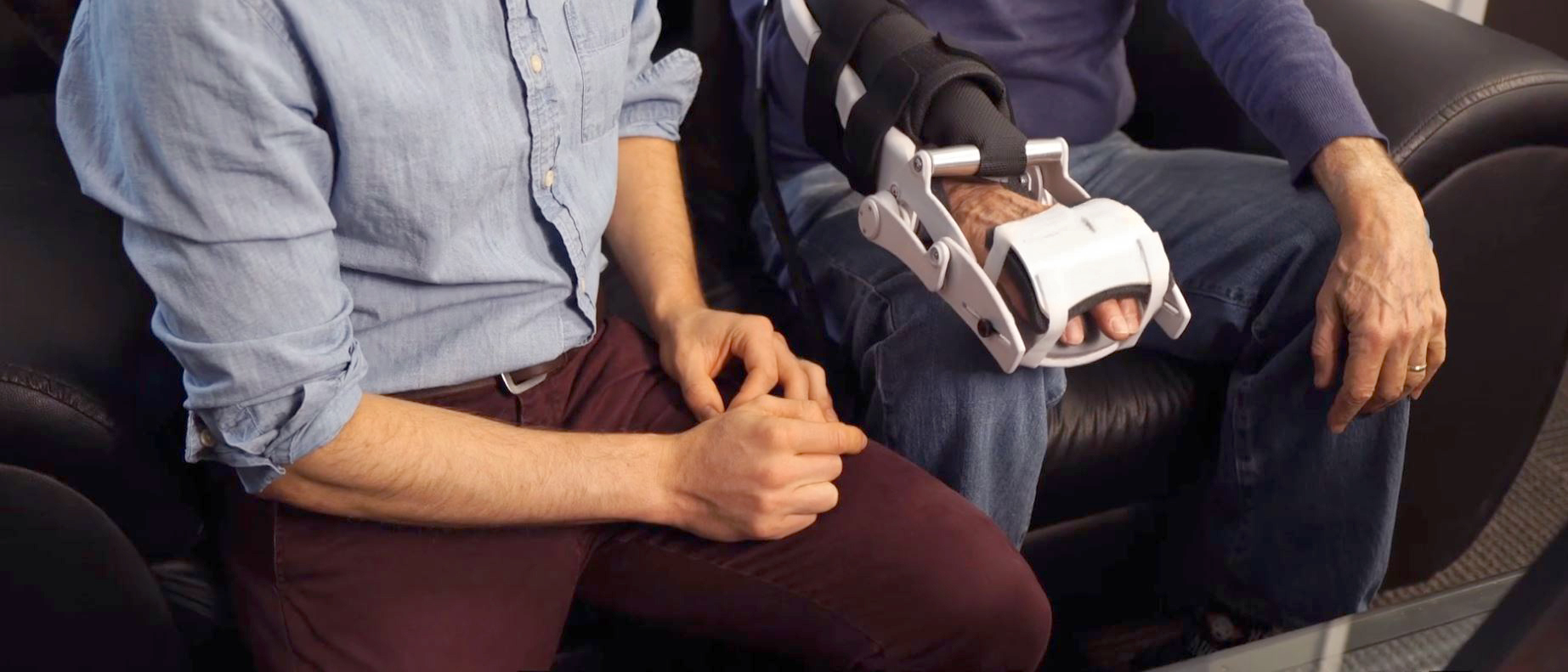
Motus Nova Hand: Personalized Rehabilitation for Stroke and Multiple Sclerosis
Recovery after a stroke or managing Multiple Sclerosis (MS) can be a long and highly individual journey. While these conditions affect people in different ways, both can create challenges with movement, strength, coordination, and everyday activities. Consistent rehabilitation can play an important role in helping individuals work toward improved function and independence.
The Motus Nova Hand is designed to support this need through AI-powered robotic rehabilitation. Motus Nova therapy robots are designed for people recovering from stroke and for individuals living with neurological conditions, providing targeted rehabilitation that can adapt as a person’s abilities change. The system is designed to bring guided therapy into the home while supporting continued practice between clinical rehabilitation sessions.
Why Consistent Rehabilitation Matters
Neurological rehabilitation often requires repetition and regular practice. After a stroke, individuals may experience reduced hand strength, limited range of motion, difficulty opening or closing the hand, or challenges with fine motor skills. These limitations can affect everyday activities such as dressing, eating, writing, and handling household objects.
People living with MS may also experience changes in strength, coordination, and mobility. Because abilities and symptoms can vary, rehabilitation approaches that can adapt to an individual’s needs may be particularly valuable.
The Motus Nova Hand is designed to encourage repetitive task practice while providing an engaging rehabilitation experience. Its technology can adjust sessions according to user progress, helping make therapy more personalized.
How Motus Nova Hand Supports Therapy
The Motus Nova Hand is an FDA Class 1 at-home stroke rehabilitation robot for the upper limbs. According to Independent Medical, it is designed to help improve grip, strength, motion, and fine motor skills. The system combines robotic assistance, artificial intelligence, biofeedback, and interactive activities to support rehabilitation.
Some of its key features include repetitive task practice that mimics aspects of clinical therapy, gamified training designed to keep sessions engaging, AI that adjusts sessions based on progress, biofeedback that reinforces correct movements, and real-time tracking of strength and mobility.
This combination can help users maintain a more consistent rehabilitation routine from home while still working toward functional goals.
Supporting Stroke Recovery at Home
For stroke survivors, improving hand and arm function can be an important part of regaining independence. Regular practice may help individuals work on movements that are directly related to everyday tasks.
Home-based rehabilitation can also provide greater flexibility. Instead of relying entirely on scheduled clinic visits, individuals may have additional opportunities to practice therapeutic movements at home. Independent Medical states that Motus devices can be used at home or in clinical settings and are designed to provide ongoing support throughout rehabilitation.
A Personalized Approach for Changing Abilities
Every person’s neurological rehabilitation journey is different. Some individuals may have significant movement limitations, while others may already have substantial movement but need to improve strength, coordination, or fine motor control.
The Motus Nova Hand uses AI technology to adjust rehabilitation based on the user’s needs and progress. Biofeedback and real-time reporting can provide additional information about performance, while interactive therapy activities are designed to help users stay motivated.
This adaptive approach is especially relevant for rehabilitation programs where abilities can change over time.
Looking Toward Greater Independence
Rehabilitation is not only about improving movement. It can also be about helping people participate more confidently in everyday activities and maintain greater independence.
With its combination of robotic assistance, AI-powered adaptation, biofeedback, and home-based therapy, the Motus Nova Hand offers an innovative approach to upper-limb rehabilitation. It can serve as an additional tool alongside professional rehabilitation, giving users more opportunities to practice consistently.
To learn more about Motus Nova and available rehabilitation solutions, visit Independent Medical’s Motus Nova page: https://independentmed.com/motusnova/
Frequently Asked Questions
1. What is the Motus Nova Hand?
The Motus Nova Hand is an AI-powered robotic rehabilitation device designed for upper-limb therapy, particularly for individuals recovering from stroke.
2. Can the Motus Nova Hand be used at home?
Yes. The device is designed for at-home rehabilitation as well as clinical use, allowing individuals to continue therapy outside traditional clinic settings.
3. How does AI support rehabilitation?
The Motus Nova technology uses an algorithm designed to adjust rehabilitation based on the user’s needs and progress.
4. What areas can the Motus Nova Hand help address?
It is designed to support improvements in grip, strength, motion, and fine motor skills of the upper limbs.
5. Is the Motus Nova Hand a replacement for professional rehabilitation?
The device is intended to provide additional rehabilitation opportunities and can be used alongside clinical rehabilitation. Individuals should work with their healthcare professionals to determine the most appropriate rehabilitation plan.